
20mm Concrete Stone for Sale: Bulk Bags & Loose Tonne Delivery
Buy 20mm concrete stone (20mm aggregate, gravel & ballast) in bulk bags or loose tonnes. BS EN 12620 guidance, mix ratios, quantity calculator and quotes.
- +27721466941
20mm Concrete Stone for Sale: Bulk Bags & Loose Tonne Delivery
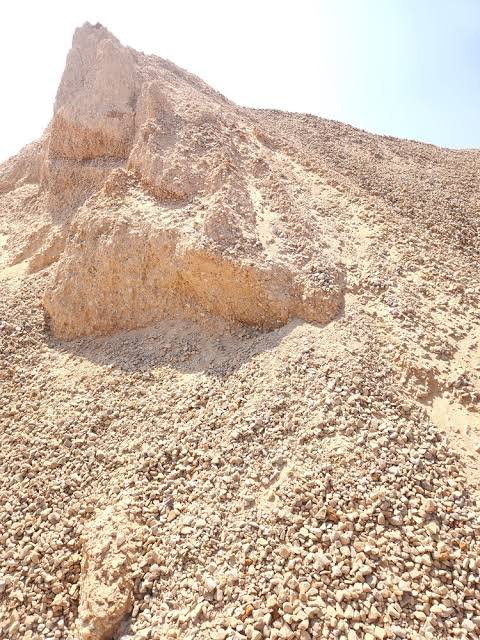
20mm concrete stone is the standard coarse aggregate used to give concrete its strength and bulk. It is a stone with a nominal maximum size of 20mm, sold in the UK under several names: 20mm aggregate, 20mm gravel, 20mm single-sized aggregate and, in its blended form, 20mm ballast.
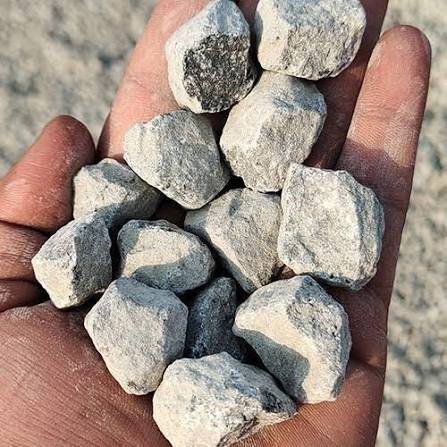
20mm Concrete Stone: Quick Specification
| Property | Typical detail |
|---|---|
| Nominal size | 20mm |
| Particle range (single-sized) | Commonly quoted as 10–20mm (written “10/20” under the European designation) |
| Product standard | BS EN 12620, Aggregates for concrete |
| Typical moisture content | Around 3% (manufacturer data sheets) |
| Bulk density | Varies by source, roughly 1.6–1.7 t/m³ for gravel; one UK supplier lists 1,650 kg/m³ |
| Supply formats | [Bulk bag ~800–850kg / loose tonne / 20–25kg bag: |
| Material type | [Natural gravel / crushed rock: |
What Is 20mm Concrete Stone?
Concrete is cement, water, sand (fine aggregate) and stone (coarse aggregate). The stone makes up the largest share of the mix by volume, so its size and cleanliness directly affect strength, workability and cost.
“20mm” is the nominal upper size: stones are screened so that nearly all pass a 20mm sieve and are retained on a smaller one. Under current European aggregate standards a 20mm single size is described as 10/20, meaning stones between roughly 10mm and 20mm. It sits between 10mm (finer, for thinner sections and tight reinforcement) and 40mm (for mass concrete).
For general UK building work, 20mm is the most common coarse aggregate size, which is why it is the default for footings, slabs and driveways.
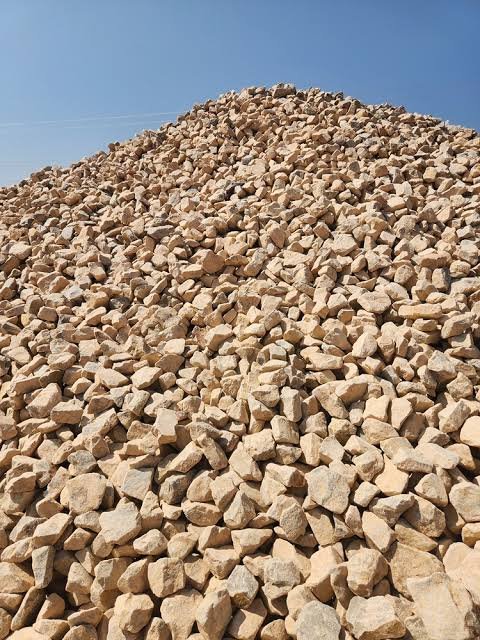
What Is 20mm Concrete Stone Used For?
- Foundations and strip footings: the stone in site-mixed or ready-mixed concrete
- Ground-floor slabs, garage bases and shed bases
- Driveways, paths and patios: as the coarse aggregate in the concrete mix
- Steps, post holes and kerb bedding
- Drainage: soakaways, French drains and pipe bedding (use clean single-sized stone, not ballast)
- Hardstanding and sub-base: as a free-draining granular layer, depending on specification
Using it for structural or specified work? Concrete for foundations or structural elements should follow the project specification (BS 8500 / BS EN 206) or the engineer’s design. Ask us or your engineer before ordering.
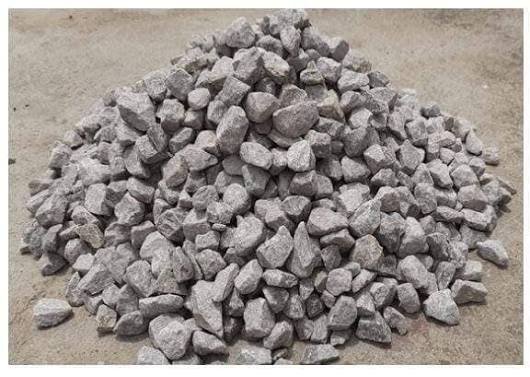
20mm Stone vs 20mm Ballast vs 10mm: Which Do You Need?
| 20mm single-sized stone | 20mm ballast (all-in) | 10mm stone | |
|---|---|---|---|
| What it is | Stones of one size band only (about 10–20mm) | Stone and sand blended, graded 0–20mm | Smaller stone band (about 4–10mm) |
| You must add | Sharp sand + cement | Cement only | Sharp sand + cement |
| Typical volume mix | 1 cement : 2 sharp sand : 4 stone | 1 cement : 6 ballast | 1 cement : 2 sharp sand : 4 stone |
| Best for | Slabs, drives, footings, drainage, bedding | Convenient site mixing of footings, bases, post holes | Thinner sections, dense reinforcement, tight spaces |
| Drainage? | Yes, clean single size drains freely | No, fines hold water | Yes, pipe bedding and filling |
Mix ratios above reflect manufacturer data sheets for packed aggregates; strength depends on cement type, water content and mixing. Ballast contains fines, so it is not suitable where free drainage is needed.
Looking for the smaller size? See our 10mm concrete stone page.
20mm Concrete Stone Mix Ratios
For small site-mixed jobs, common volume ratios are:
- Single-sized 20mm stone: 1 part cement : 2 parts sharp sand : 4 parts 20mm stone
- 20mm all-in ballast: 1 part cement : 6 parts ballast (manufacturer guidance for footings, foundations, post setting and steps)
Mix by volume using the same container, add water gradually and avoid a sloppy mix, because excess water weakens concrete. For larger pours, structural work or where strength must be proven, order ready-mixed concrete to a specified mix instead of mixing on site.
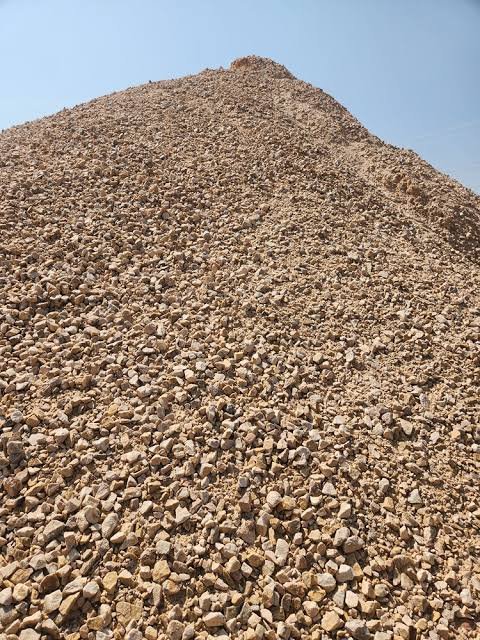
How Much 20mm Concrete Stone Do I Need?
Step 1. Work out the concrete volume.
Length × width × depth (all in metres). Example: a 5m × 4m slab at 100mm = 5 × 4 × 0.1 = 2.0 m³ of concrete.
Step 2. Convert to dry stone volume.
Dry materials occupy more space than wet concrete, so a common allowance is about 1.5 times the wet volume. For a 1 : 2 : 4 mix the stone is 4 of 7 parts: 2.0 m³ × 1.54 × 4/7 ≈ 1.76 m³ of 20mm stone (plus roughly 0.88 m³ sharp sand and about 12 bags of cement).
Step 3. Convert to tonnes.
1.76 m³ × about 1.65 t/m³ ≈ 2.9 tonnes. Add a 5–10% allowance for waste and uneven ground.
Rule of thumb for bagged material:
manufacturer data sheets quote roughly 0.5–0.6 m³ of concrete per ~850kg bulk bag of 20mm ballast. Always check the product data sheet for the exact material you order.
20mm Concrete Stone Price: What Affects the Cost
Price is quoted per bulk bag or per tonne. We do not publish a single fixed price because it moves with:
- Material and source: natural gravel versus crushed rock, and distance from the quarry
- Supply format: loose tonnes are usually cheaper per tonne than bags but need suitable tipper access and a place to tip
- Quantity: price breaks on larger orders
- Delivery location and access: postcode, vehicle size, crane or tipper offload
- Collection vs delivered
Get a quote for your postcode, usually [response time: CONFIRM]. Prices include/exclude VAT: [CONFIRM].

Quality, Standards & Safe Handling
- Standard: 20mm aggregate for concrete should conform to BS EN 12620. Ask for the manufacturer’s technical data sheet or declaration of performance.
- Cleanliness: concrete stone should be free of clay, soil and organic matter, which weaken the bond with cement.
- Natural variation: colour and texture vary by quarry; this does not affect concrete performance but matters if the stone will be visible.
- Storage: keep on a clean hard surface, away from soil and drains, and covered if heavy rain would disturb moisture content.
- Safety: cement is alkaline and can burn skin; wear gloves, eye protection and a dust mask when mixing, and lift bulk bags only with suitable equipment. See HSE guidance on cement and manual handling.
Get In Touch With Us!
Phone
+27721466941
info@analogsolution.com