
63mm Limestone for Sale: Crushed Sub-Base & Fill, Bulk Bags and Loose Tonnes
Buy 63mm limestone (63mm down crushed limestone) for sub-base, fill and hardstanding. Bulk bags or loose tonnes, quantity guide and quotes.
- +27721466941
63mm Limestone for Sale: Crushed Sub-Base & Fill, Bulk Bags and Loose Tonnes
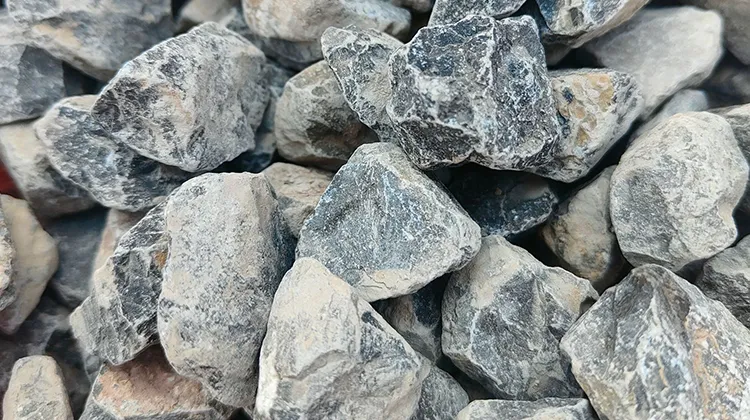
63mm limestone is a coarse crushed limestone used to build strong, free-draining bases under driveways, car parks, tracks and hardstanding, and to raise and fill ground. The most common form is 63mm down: crushed rock graded from 63mm stone through to fine dust, which compacts tightly into a solid layer.

63mm Limestone: Quick Specification
| Property | Typical detail |
|---|---|
| Material | Crushed limestone (a single sedimentary rock type) |
| Grading (63mm down) | 63mm stone down to dust, with fines that lock the stone together |
| Grading (clean stone variants) | Fines removed: e.g. 40–63mm or 10–63mm single-sized / open-graded |
| Typical product standard | BS EN 13242, aggregates for unbound and hydraulically bound materials in civil engineering and road construction [CONFIRM what your supplier declares] |
| Bulk bag | Approx. 800kg (a 90 × 90 × 90cm bag is typical for 63mm-down limestone) |
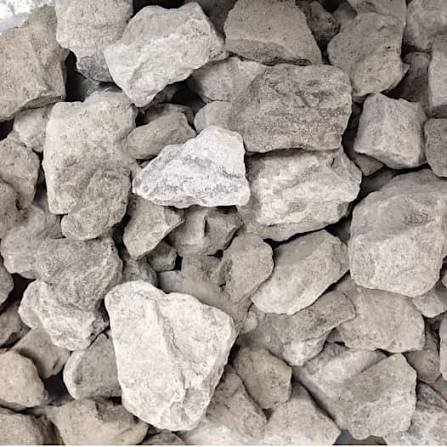
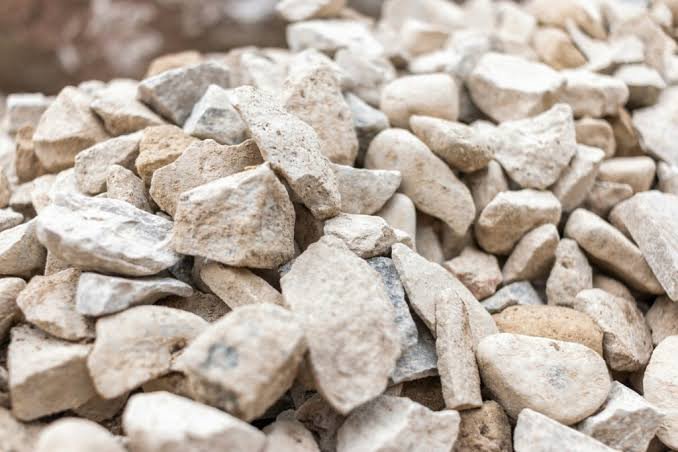
| Colour | White, grey or cream, varies by quarry; natural variation is normal |
| Not intended for | Decorative surfacing, or as a concrete aggregate (use 10mm or 20mm stone for concrete) |
What Is 63mm Limestone?
Limestone is a sedimentary rock made mainly of calcium carbonate. Crushed and screened, it is one of the most widely used construction aggregates in the UK, valued for strength, availability and the way it packs down when compacted.
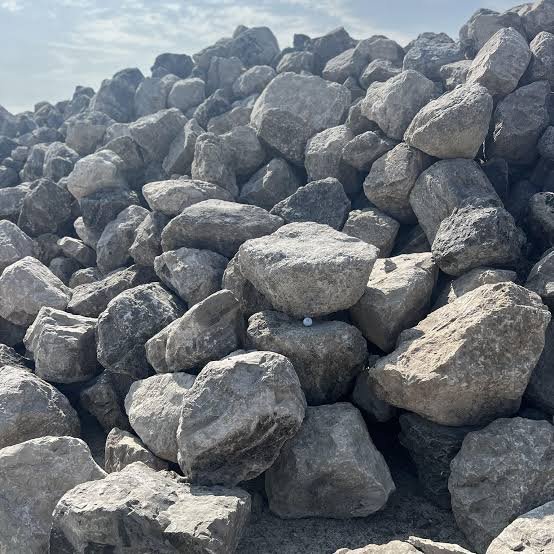
“63mm” describes the largest stone size in the product. In 63mm down limestone, the stones range from 63mm to dust. That mix of sizes is deliberate: the larger stones carry the load and the smaller particles fill the gaps, so when the layer is compacted it forms a dense, stable base. It is a coarse, robust alternative to finer sub-base grades and suits heavy-duty ground-raising where you need depth and stability at an economical price.
Which 63mm Limestone Do You Need?
| 63mm down limestone | 40–63mm clean limestone | 10–63mm limestone (drainage-type) | |
|---|---|---|---|
| Fines? | Yes, graded to dust | Removed, open voids | Mixed stone sizes, fines mostly removed |
| Compacts into a solid layer? | Yes | No, stones interlock but stay open | Limited |
| Drains freely? | Moderately, depends on fines | Yes, very free-draining | Yes |
| Typical uses | Sub-base, building up levels, tracks, fill, hardstanding | Drainage layers, soakaway fill, gabion-style fill, bulk drainage | Drainage layers and permeable-construction base [CONFIRM per spec] |
| Choose when | You need a base that compacts and bears load | Water must pass through quickly | Your design specifies an open-graded or permeable sub-base |
Product names and size bands vary between suppliers, so always check the declared grading on the data sheet. If unsure, tell us what the layer must do (carry load, drain, or both) and we will advise.
What Is 63mm Limestone Used For?
- Driveway and car park sub-base: the load-bearing layer beneath tarmac, block paving, concrete or resin
- Hardstanding and yard bases: for vehicles, plant and storage
- Tracks and site roads: a robust running surface for construction access
- Building up levels and general fill: raising ground, filling hollows, backfilling
- Building and garage bases: sub-base under concrete slabs
- Drainage layers and bulk drainage fill: using the clean, single-sized variants
This is a construction-grade material, not a decorative aggregate. For visible, decorative finishes choose limestone chippings instead.
How to Lay 63mm Limestone for a Strong Base
Excavate to formation
- level and remove topsoil, roots and soft spots.
Check the subgrade.
- Soft or clay ground may need a geotextile membrane or a thicker base: seek advice for load-bearing work.
Spread in layers.
- Keep each layer comfortably deeper than the largest stone (63mm), so very thin layers are not suitable.
Compact thoroughly
- with a vibrating plate or roller, lightly damping the surface if dry so the fines bind.
Set falls for drainage
- so water runs away from buildings.
Blind the surface
- if a finer top layer is required before the finished surface.
How Much 63mm Limestone Do I Need?
Step 1.Work out the compacted volume.
Length × width × depth (all in metres). Example: a 10m × 3m driveway at 150mm = 10 × 3 × 0.15 = 4.5 m³.
Step 2. Convert to tonnes.
Multiply by the compacted density. Crushed limestone sub-base commonly compacts to roughly 2.0–2.2 t/m³ depending on the source (one UK limestone quarry’s environmental declaration records a maximum dry density of 2.14 t/m³). Using 2.1 t/m³: 4.5 × 2.1 ≈ 9.5 tonnes.
Step 3.
Add an allowance. Allow about 10–15% extra for compaction, uneven ground and waste: roughly 10.5–11 tonnes for this example.
Bulk bag check:
an approx. 800kg bag covers about 0.38 m³ of compacted material at 2.1 t/m³, so 4.5 m³ would be about 12 bags before allowance. For this volume, loose tonnes are normally more economical if you have vehicle access.
63mm Limestone Price: What Affects the Cost
Price is quoted per tonne or per bulk bag. We do not publish one fixed price because it varies with:
- Grading and source: 63mm down, clean stone or spec-compliant sub-base, and distance from the quarry
- Supply format: loose tonne loads are usually cheaper per tonne than bags but need tipper access and tipping space
- Quantity: price breaks on larger orders
- Delivery location and access: postcode, vehicle size, offload method
- Collection vs delivered
Quality, Standards & Safe Handling
- Standards: aggregates for sub-base and unbound civil engineering use are covered by BS EN 13242; ask for the technical data sheet or declaration of performance showing grading and properties.
- Spec work: where Type 1 or another named specification is required, say so up front and ask for confirmation.
- Natural variation: limestone colour varies by quarry; this does not affect performance in a sub-base.
- Rail ballast is a different product: 31.5/63mm is a railway ballast size defined by a separate standard, and track ballast has to meet Network Rail requirements. It is not a general substitute for 63mm limestone.
- Storage: keep stockpiles on a hard, clean surface and away from drains and watercourses.
- Safety: wear gloves, eye protection and a dust mask when handling dusty material; lift bulk bags only with suitable equipment.
Get In Touch With Us!
Phone
+27721466941
info@analogsolution.com