
G7 Sub-Base Material for Sale | G7 Gravel Suppliers
Looking for G7 sub-base material for sale? We supply enquiries for G7 granular material used in road construction, pavement foundations, earthworks and infrastructure development.
G7 is a recognised South African pavement material classification associated with natural gravel materials. It is generally considered for selected lower pavement layers and applications where its engineering properties meet the project requirements.
Whether you are constructing a rural access road, preparing an industrial site, developing a property or undertaking road maintenance, we can assist with your G7 material supply enquiry.
Contact us with your required quantity, project location and material specifications to request a quotation.
- +27721466941
info@analogsolution.com
G7 Gravel Material for Road Construction and Site Preparation
G7 material is used in selected civil engineering and construction applications where a suitable granular material is required for pavement layers and ground preparation.
Its application depends on the material’s grading, plasticity, strength characteristics and the conditions of the construction site.
G7 material enquiries are particularly relevant to:
Rural road construction.
Farm and agricultural access roads.
Road formation and earthworks.
Industrial site preparation.
Selected pavement foundation layers.
Property development and infrastructure projects.
Construction access routes.
The correct material classification should always be determined by the approved engineering design.

What Is G7 Material?
G7 is a natural gravel pavement material classification used in South African road construction specifications.
It generally represents a lower-grade material classification than G5 and G6, with its own requirements for grading, plasticity and other engineering characteristics.
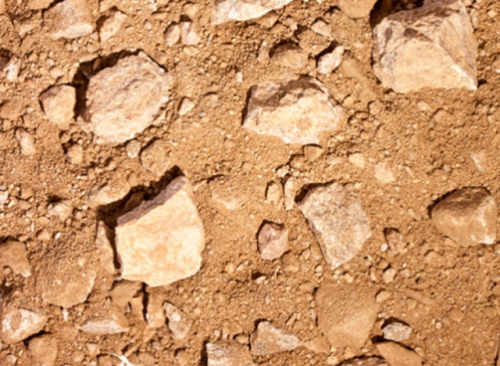
Depending on the source, G7 material may contain a combination of gravel-sized particles, sand and finer soil particles.
Its performance depends on the actual material properties and the conditions under which it is placed.
G7 should not be confused with ordinary excavated soil or untested fill material. A material must meet the applicable classification requirements before being marketed as G7.
Common Applications of G7 Material
Pulvinar accumsan lacus accumsan. A expedita laudantium, habitant maiores voluptatum massa curae, senectus distinctio porro distinctio necessitatibus iste.
1. Road Formation
Road formation involves preparing the ground to the required shape, level and profile before constructing the pavement layers. Suitable G7 material may be specified in selected formation and pavement preparation applications, depending on the engineering design.
3. Construction Site Preparation
Building and infrastructure projects frequently require earthworks before permanent construction begins. Specified granular materials may be used in selected site preparation and working platform applications.
2. Rural and Farm Access Roads
Agricultural properties and rural developments often require access routes for vehicles, machinery and equipment. G7 may be considered in suitable road construction applications where the expected traffic and ground conditions allow its use.
4. Industrial and Commercial Developments
Industrial properties, storage facilities and commercial developments may require prepared access areas and internal road infrastructure. The selected pavement materials must accommodate the expected vehicle movements and loading conditions.
5. Road Maintenance and Rehabilitation
Certain road maintenance and rehabilitation projects require the replacement or improvement of existing pavement materials. G7 may be considered for designated layers where approved by the project engineer.
6. General Earthworks Applications
G7 material may also be considered for selected earthworks applications where the material properties and project specifications permit its use. Its suitability should be assessed before using it as engineered fill or a structural foundation material.
Understanding G7 Material Classification
South African granular pavement materials are classified according to their engineering properties rather than simply their appearance or particle size.
The following classifications have different specification requirements:
| Material | General classification |
|---|---|
| G2 | Higher-grade granular pavement material |
| G3 | Granular pavement material with different strength requirements |
| G5 | Natural gravel pavement material |
| G6 | Lower-grade natural gravel material |
| G7 | Lower-grade natural gravel material for specified pavement applications |
These materials are not automatically interchangeable. Their use depends on the approved pavement design, traffic requirements and laboratory test results.
What Determines the Quality of G7 Material?
When sourcing G7, it is important to establish whether the material meets the required engineering specification.
Consider the following quality factors:
Grading distribution: The proportion of coarse, medium and fine particles affects the material’s behaviour.
Plasticity: The properties of the fine fraction influence how the material responds to moisture.
Material strength: Appropriate laboratory testing helps determine whether the material meets the required classification.
Moisture conditions: Water content influences handling, placement and compaction.
Compaction performance: The material must achieve the density required by the project specification when used in a compacted layer.
For formal road construction projects, request the relevant material test reports before accepting a supply.
G7 Material vs G5 Material
Although both materials are used in South African road construction, G5 and G7 have different engineering classifications.
G5 generally has more demanding material quality requirements and is used in applications requiring a higher-grade granular material.
G7 has different and generally lower material requirements, making it suitable only for applications where the pavement design permits its use.
The decision should be based on the engineer’s specification rather than selecting a material based on cost or availability alone.

Estimating Your G7 Material Quantity
If you are preparing a road or construction site, estimating the required material volume is an important part of planning your order.
Use the following calculation:
Required volume = Length × Width × Layer Thickness
Example:
Length: 150 metres.
Width: 5 metres.
Layer thickness: 200mm.
Calculation:
150 × 5 × 0.20 = 150m³ compacted volume.
This is the theoretical compacted volume. The loose supply quantity may differ depending on material density, moisture content and compaction.
Ask your supplier to assist with the appropriate conversion to tonnes when preparing your order.
G7 Material Prices and Supply Enquiries
Looking for a G7 gravel price?
The final cost will depend on:
Required quantity.
Material source and availability.
Delivery distance.
Loading and transport costs.
Project specifications.
Required delivery arrangements.
For a quotation, provide your site location, estimated quantity and intended application.
We welcome enquiries for both smaller construction requirements and larger bulk material orders.
Request a G7 Sub-Base Quotation
Need G7 material for road preparation, earthworks or an infrastructure project?
Send us your requirements to enquire about supply and pricing.
Please provide:
Required quantity in tonnes or cubic metres.
Delivery location or collection requirements.
Intended application.
Required material classification.
Any applicable project specifications.
Preferred delivery date.
Get In Touch With Us!
Phone
+27721466941
info@analogsolution.com