
Unselected Dump Rock for Sale: Bulk Rock Fill by the Tipper Load
Buy unselected dump rock by the tipper load: quarry-run rock fill for haul roads, ground raising and bulk infill. What it is, what it isn’t, and how to order.
- +27721466941
Unselected Dump Rock for Sale: Bulk Rock Fill by the Tipper Load
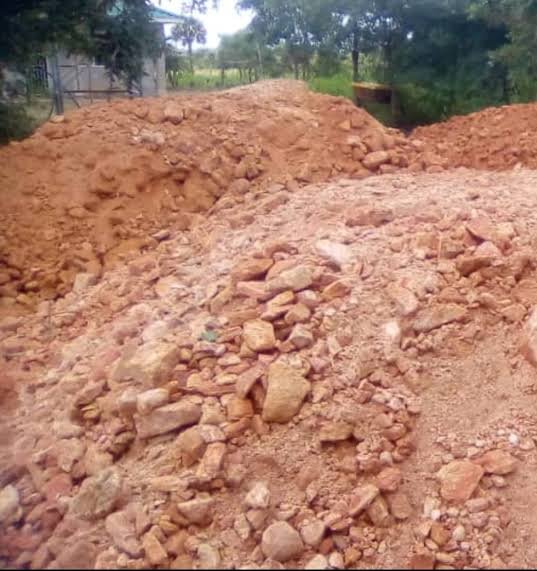
Unselected dump rock is rough, quarry-run rock sold in bulk for jobs where strength and volume matter more than neat grading. It is blasted, loaded and delivered without being screened to a size or picked for shape, so you get a mixed range of rock from small stone to larger lumps at a lower cost per tonne than graded stone.

Is Unselected Dump Rock Right for Your Job?
It is a good fit if you need:
- A tough, heavy fill to build up levels cheaply
- A temporary or semi-permanent haul road or site access track
- A bulk infill for a large void, bund or embankment core
- A stable, free-draining rock layer under a working area, subject to design
- Large volumes delivered quickly by the tipper load
Look at another product if you need:
- A level, tightly compacted base to a stated grading (use graded sub-base, e.g. 63mm limestone or Type 1)
- Stone for concrete (use 20mm concrete stone or 10mm)
- Controlled-size rock for sea defences, river bank protection or scour control (use graded armourstone to BS EN 13383)
- Anything visible or decorative
If you are not sure, tell us what the ground has to do and we will say plainly whether dump rock will do it.

What "Unselected" Actually Means
“Unselected” means the rock has not been selected: nobody has screened it to a size band, rejected awkward shapes or sorted it into a specification. What leaves the quarry face is what you receive, within whatever the quarry processing allows. In practice that gives you:
- A wide, uneven size range, from fine material and small stone up to larger lumps [MAX LUMP SIZE: CONFIRM]
- Angular, irregular pieces that interlock when tipped and tracked
- Some fines mixed in, which varies load to load [FINES: CONFIRM]
- Natural colour and rock-type variation, depending on where in the quarry face it came from
That variability is exactly why it is cheap, and exactly why it must not be specified where consistent grading is required. “Dump” refers to how it is supplied: tipped from the quarry or dump truck rather than loaded as a finished, graded product.
Dump Rock vs Armourstone vs Graded Aggregate
| Unselected dump rock | Graded armourstone | Graded aggregate (e.g. 63mm down) | |
|---|---|---|---|
| Size control | None: quarry-run | Strict: graded by mass band under BS EN 13383 | Strict: graded by sieve size |
| Shape control | None | Checked | Not applicable |
| Main purpose | Bulk fill, haul roads, ground raising | Coast, river and scour protection, where size and mass resist wave or water forces | Compacted bases and fill to a specification |
| Compacts to a smooth, even surface? | No: rough and open | No | Yes |
| Cost per tonne | Lowest | Highest | Middle |
| Evidence you can request | Rock type, source, maximum lump size | Compliance with the declared EN 13383 grading | Grading and declaration data |
Armourstone is sold in standardised mass-based classes because its job, resisting wave and water forces, depends on every piece being heavy enough and interlocking in a known way. Dump rock offers none of those guarantees, so do not use it for coast protection or scour control unless an engineer has specifically approved it.
What Is Dump Rock Used For?
Haul roads and access tracks.
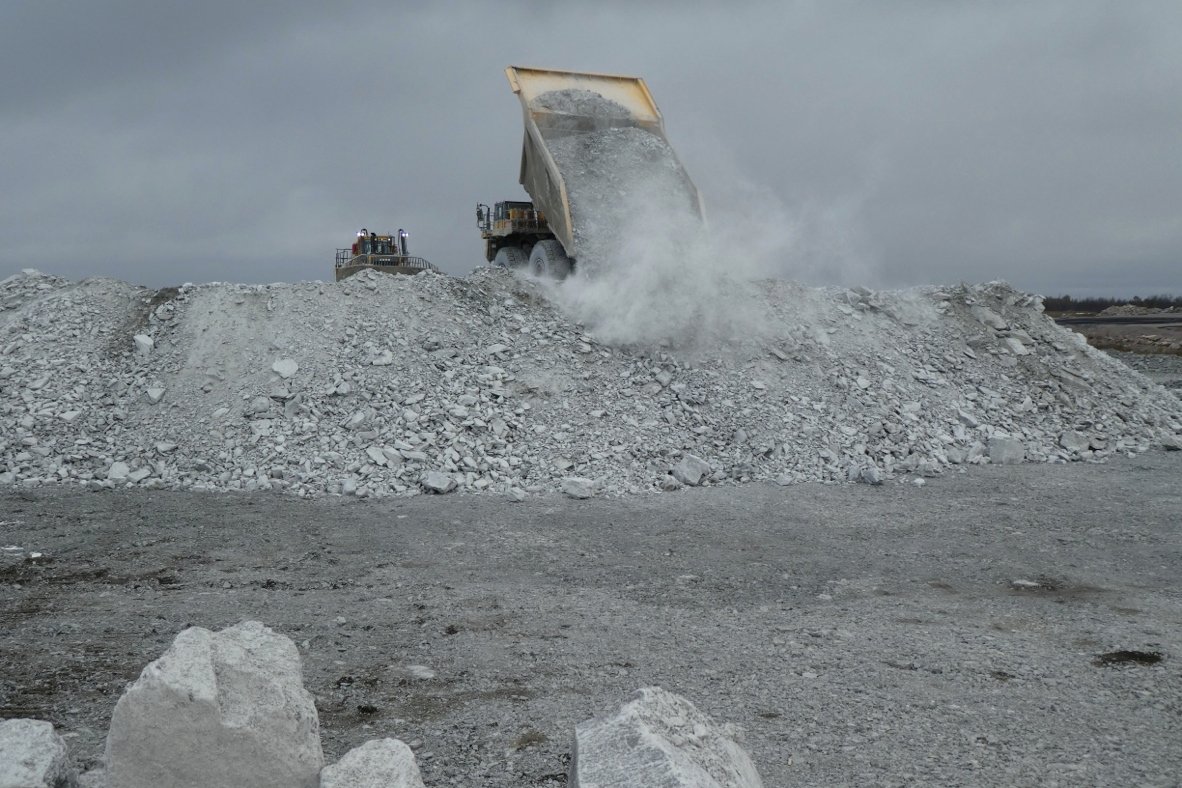
Heavy rock tipped and tracked in gives plant and lorries a stable running surface over soft ground. Placed over a geotextile it stops the rock sinking into the subsoil.
Raising ground levels and bulk infill.
For large depths, rock is far cheaper than buying graded stone by the same volume. Fill in layers and finish with a finer capping where a smoother top is needed.
Working platforms.
Tracked plant (cranes, piling rigs) needs a platform designed to carry its loading: follow the BRE guidance on working platforms (BR 470) and have the design checked before laying.
Bunds, banks and embankment cores.
s bulk fill inside a designed structure.
Void and trench infill.
Where the volume is large and appearance does not matter.
Drainage-type fill.
The open voids between lumps let water move through; confirm fines content if drainage performance matters.
How to Place Dump Rock Properly
- Strip and level the footprint. Remove topsoil and soft spots.
- Lay geotextile over soft ground to stop the rock punching into the subsoil. [Link to geotextile page.]
- Tip and spread in controlled layers with a tracked excavator or dozer rather than one deep dump, so rock interlocks.
- Track it in. Run plant over each layer to wedge pieces together. Dump rock settles and beds in rather than compacting like graded aggregate.
- Fill the surface voids. Where a smoother finish is needed, blind the top with a finer graded material.
- Plan the falls so water runs off or through the structure and not into your neighbour’s land.
Expect some settlement over the first weeks of use. For load-bearing or permanent structures, get the build-up designed rather than relying on rules of thumb.
Ordering Dump Rock by the Load
Dump rock is sold loose by weight and delivered in tipper loads, not in bags, because the lump sizes and weight make bagging impractical. Here is how to get a firm price quickly:
- Estimate your volume in cubic metres (length × width × depth).
- Convert to tonnes. Rock itself is dense (limestone is commonly around 2.6–2.7 t/m³; one UK quarry declaration records about 2.65–2.67), but loosely tipped rock contains voids, so its bulk density is lower, often somewhere around 1.6–1.9 t/m³ depending on rock type and lump size. We confirm the figure for the rock you are buying. Worked example: 120 m³ of fill × 1.7 t/m³ ≈ 204 tonnes.
- Think in loads. Tipper loads are typically [LOAD SIZES: CONFIRM, e.g. 8-wheeler / articulated]. Ask for the number of loads, not just tonnes, so you can plan the tipping area and haulage.
- Add a margin for settlement and spreading losses: [SUGGESTED ALLOWANCE: CONFIRM].
What we need from you: delivery postcode, tonnes or loads, where the lorry will tip, access width and any weight or height limits. A photo of the tipping area speeds things up.
Where the lorry goes: it needs a firm route and a safe place to tip, clear of overhead cables and soft ground. Tell us about gates, bridges and tight turns, because they decide which vehicle can reach you.
What Affects the Price of Dump Rock
We quote per tonne or per load, and the price depends on:
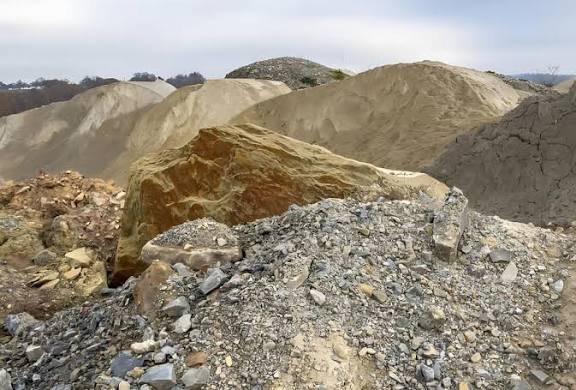
- Rock type and source quarry, plus the haulage distance from it
- Total quantity: larger orders spread haulage and loading costs
- Delivery distance and access, including difficult sites and waiting time
- Collection or delivered: collection from [YARD: CONFIRM] if you have your own tipper
- Aggregates Levy: primary (virgin) rock extracted for bulk fill is subject to this UK tax. Ask any supplier whether the quoted price includes it so quotes compare like with like.

Checking Your Delivery
Because the material is unselected, inspect it as it arrives:
- Check the rock type and appearance match what was quoted.
- Look at the largest lumps. Anything too big for your plant or placement method should be flagged before you accept the whole load.
- Look for contamination. Soil, clay, roots or foreign material should not be in quarry-run rock.
- Keep the weighbridge ticket for quantity and traceability.
- Raise issues immediately, before the load is spread, so we can resolve them.

Get In Touch With Us!
Phone
+27721466941
info@analogsolution.com